




























Ever watched your child turn a couch into a castle or a cardboard box into a rocket ship? That’s not just cute; it’s neuroscience in action.
Creative play, whether it’s drawing, building, pretending, or storytelling, lights up more parts of a child’s brain than almost any other activity. It helps them learn how to plan, focus, adapt, and even manage emotions. And here’s the best part: they don’t even realize they’re learning.
At Jumbaloo, we see it every day: kids who walk in just to “play” end up building skills for life. Here’s what’s really happening in their brains, and easy ways to spark more of it at home (and on your next Jumbaloo visit).
1) Creative Play Builds Cognitive Muscles
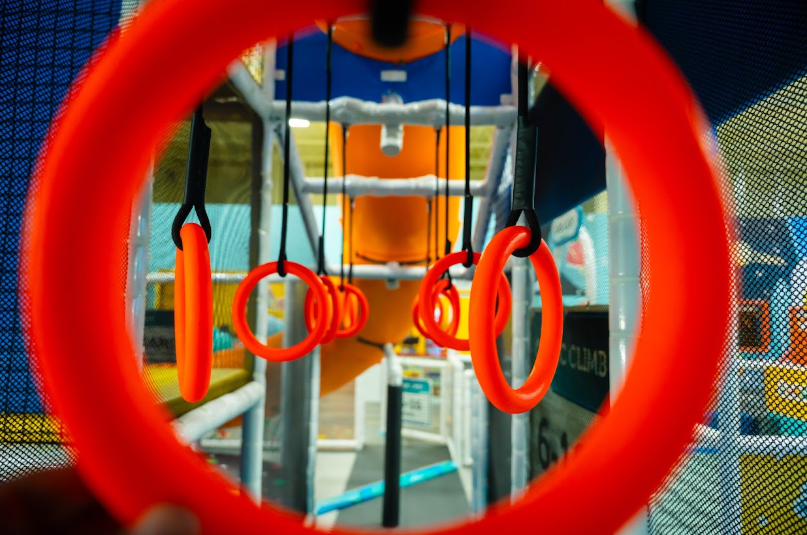
When kids invent worlds or turn the couch into a castle, they’re training working memory, attention, and flexible thinking. Every “uh-oh, it tipped, let’s try again” moment is problem-solving in disguise.
Try this at home (5–10 mins):
- Pick a theme: “Build a zoo” or “Design a tiny town.”
- Offer loose parts: blocks, boxes, lids, tape, and pillows.
- Ask thinking prompts: “How do visitors get around?” “Where do animals sleep?”
- Step back. Let them drive the plan.
At Jumbaloo: Our open-ended build zones let kids test, tinker, fail fast, and try again, no instructions needed.
2) Storytelling Grows Emotional Intelligence
Role-play (“You’re the vet; I’m the hedgehog”) helps kids read feelings, take turns, and regulate big emotions. Pretend scenarios are a safe lab to practice empathy.
Try this at home:
- Pick two props (a scarf and a spoon can become anything).
- Start a 3-line story and pass the next line to your child.
- Use feeling words: “The dragon looks worried. What would help?”
Record their play as a “podcast” on your phone. Replaying it builds narrative memory and pride.
3) Open-Ended Play Builds Real Confidence
No scores, no grades, just I made this. Open-ended art and construction boost persistence and “I-can-figure-this-out” energy.
Set up a “yes zone” at home:
- A small mat or table where mess is allowed.
- Materials you don’t have to guard: scrap paper, washi tape, cardboard, crayons, recyclables.
- Your script: “Show me how it works,” not “Here’s how to do it.”
At Jumbaloo, Kids choose their own challenges, climb here, build there, so confidence grows naturally.
4) Building Play Sharpens Focus & Logic
Puzzles, LEGO, magnetic tiles, and even obstacle paths train executive function (planning, sequencing, spatial awareness).
Mini-challenge:
- “Bridge Mission”: Build a bridge that holds three toy cars.
- Add constraints: Only five blocks. No blue pieces.
- Reflect: “What made it stronger the second time?”
Quiet corner idea: Create a “focus bin” for after school with 2–3 puzzles or tile sets. Rotate weekly to keep it fresh.
5) Movement and Imagination Supercharge Brain Growth
Movement increases blood flow and primes the brain for learning. When kids run, climb, act, and build in the same session, the body and brain learn together.
Indoor energy reset:
- Tape a simple floor path (zig-zag, hop, tiptoe) leading to a “maker station.”
- After the path, kids draw or build “what the explorer found.”
At Jumbaloo, our active zones and pretend spaces are designed to blend movement and make-believe, perfect for wiggly brains.
Story and Art Make Stronger Language Pathways
When kids draw what they imagine and then tell you the story, they’re practicing vocabulary, sequencing, and narrative skills, the building blocks for reading and writing. This is one of the benefits of creative play for child development that shows up quickly in school: children recall details more effectively, organize their thoughts, and speak with confidence.
Try this at home:
- “Draw & Tell”: After drawing, ask three prompts: Who’s here? What’s happening? What happens next?
- Caption it together. You write their words verbatim.
- Build a “story box” with random photos, stickers, and magazine cutouts for quick inspiration.
At Jumbaloo: Snap a pic of your child’s creation and have them narrate the adventure on the ride home, an instant language workout.
7) Simple Routines Supercharge Creative Focus
A predictable rhythm, a tiny setup, a short play burst, and a quick tidy help kids return to deep play faster. That routine trains executive function and makes creative play for cognitive development easier to incorporate into daily routines (even on busy school nights).
Doable rhythm (10–20 minutes):
- Set: Two choices on a tray (blocks + animals, or crayons + tape).
- Play: Timer for 8–12 minutes of uninterrupted making/pretending.
- Reflect: “What did you figure out today?” (builds metacognition)
- Reset: One-minute tidy race, future-you will thank you.
Screen sanity tip: Pair screens with creativity. After a show, ask: “Build one scene with tiles,” or “Draw a new ending.” Screens become a springboard, not a stopper.
Quick Takeaway for Parents
Creative play isn’t filler; it’s a foundation. A little every day builds attention, problem-solving, empathy, and confidence. Whether it’s a kitchen-table fort or an indoor adventure at Jumbaloo Mississauga, play now means skills for life.

 Don't Miss a Moment of the