




























If you’ve ever taken your child to an indoor playground and thought, “Okay, they’re finally moving,” you’re not wrong. Indoor play absolutely helps kids burn energy. But many indoor playground benefits are the ones you notice later, not in the moment.
They show up when your child tries something without asking for a boost of reassurance, when they calm down faster after a disappointment, or when they find their voice with other kids. You see it when they fall, pause, and decide to try again anyway. That’s not “just play.” That’s growth happening in real time, and it’s one of the most meaningful benefits of an indoor playground for growing kids.
International Women’s Day conversations often centre around courage and confidence. The truth is, those traits don’t magically appear in adulthood. They start early. One of the safest places for children to build confidence, resilience, and social skills is through active play.
Confidence grows through “brave tries”
Confidence isn’t something you can simply tell kids to have. It’s something they build through repetition. A child doesn’t become confident because they hear “you’re brave.” They become confident by taking brave steps in small, manageable increments.
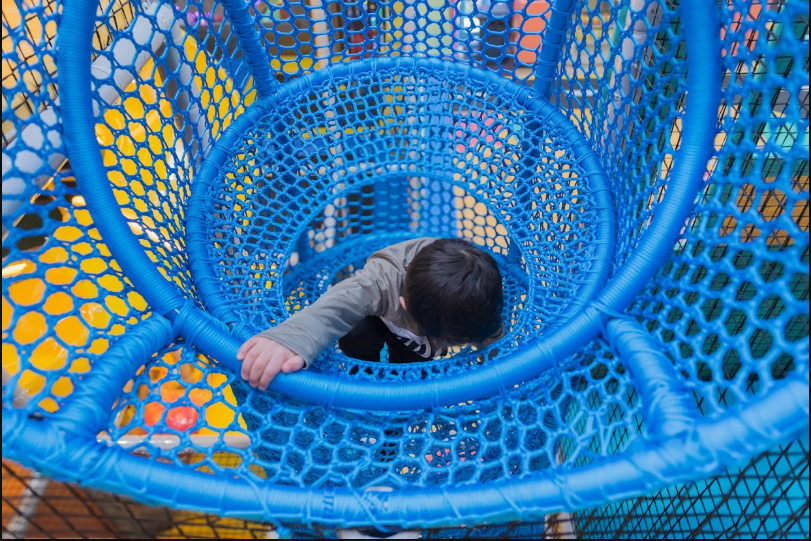
In an indoor playground, those steps happen naturally. A child might watch a climbing structure for a while before deciding to try. They might pause at the top of a slide and need a second to feel ready. They might try something new, retreat, and then come back. Each of those moments counts. And over time, the message they absorb is simple and powerful: “I can do hard things.”
If you want to support that in a way that actually lands, focus on what they did, not just the outcome. You can say, “That looked a bit scary, and you still tried.” Or, “I saw you take your time and figure it out.” Those kinds of words help kids connect confidence to effort, not perfection.
Social skills get practised, not preached
Most kids don’t learn social skills through instructions. They learn by being in situations where they must navigate others. Indoor play spaces create those moments constantly, without making it feel like a lesson.
Children practice taking turns, reading body language, sharing space, negotiating rules, and resolving minor conflicts. They also learn how to approach other kids, join a game, and recover when a social moment feels awkward. For shy children, this can be especially helpful because the interaction is built around play rather than pressure. There’s something easier about saying “want to race?” than forcing small talk.
As a parent, you don’t need to hover for every interaction. Light coaching works best. If your child struggles to join in, give them a simple line they can use, such as “Can I play too?” If they get frustrated, help them name what they want instead of blaming the other child. This keeps the learning gentle and realistic.
Resilience shows up in the “try again” moments
One of the most important benefits of indoor playgrounds is resilience. Not the dramatic, motivational kind. The everyday kind that helps kids handle frustration and keep going.
Active play is full of small setbacks. Kids slip, misjudge a jump, lose a race, or get told, “Wait your turn.” Those moments are uncomfortable, and they’re also incredibly useful. Over time, children learn that frustration isn’t an emergency. It’s a feeling they can move through.
When a child gets upset after a small fall or a mistake, it’s tempting to say, “You’re fine.” But a more helpful approach is to acknowledge the difficulty and offer a choice. You can say, “That was hard. Do you want to try again, or take a break first?” This builds emotional control without shutting down their feelings.
Movement builds body confidence, too
Beyond the emotional and social side, indoor play helps kids develop body confidence. Climbing, balancing, crawling, and sliding all strengthen coordination, spatial awareness, and control over their movement. This matters more than we realise, because when kids trust their bodies, they often feel more confident overall.
Many parents notice it in simple ways. Kids become less hesitant. They move with more ease. They attempt things more quickly. They seem more capable in everyday physical tasks, such as climbing stairs, navigating playgrounds, or participating in sports. Those changes don’t come from one big moment. They come from repeated play experiences.
Active play can support better moods and calmer days
Most parents can tell you this without needing a study: kids are often easier to manage after they’ve moved their bodies.
When children have the opportunity to run, climb, and explore, they release energy and reset emotionally. That doesn’t mean every day becomes perfectly calm, but it can make routines feel less tense. Many families find that active play days lead to fewer major emotional outbursts later and sometimes even smoother bedtime routines.
It’s not a magic fix. It’s just one of those small parenting wins that can make a noticeable difference.
Give them room to play, reset and recharge
Explore Argentia PlaytimeIndoor play helps parents, too, and that matters
This part doesn’t get said enough. Indoor play supports parents as well.
It gives you a screen-free outing that doesn’t require a complicated plan. It takes pressure off you to be the main source of entertainment. It gives you a change of scenery. And it lets you watch your child interact, explore, and grow in ways you can’t always see at home.
Sometimes the best parenting decision is simply to create the right environment and let your child do the work of building confidence.
A simple “play goal” for your next visit
If you want your next visit to feel a little more purposeful, choose one small goal. Keep it light. The point isn’t to turn play into a task. The point is to notice growth.
You can encourage your child to try one new thing they usually avoid. Or to start a social moment, like asking another child to join a game. Or to try again after one small mistake. Then celebrate the effort, not the result. That’s where the real learning is.
If you’re looking for an easy way to give your child that kind of practice, planning a playdate and dropping in for playtime in Mississauga can be a simple win, especially on days when home feels too small for big energy.
How does this naturally connect to camp?
If your child thrives after active, social play days, camp can be a natural next step. The same indoor playground benefits apply in camp as well, just in a more structured setting.
Kids build confidence by trying new activities. They build social skills by working in groups. They build resilience by navigating small challenges with support and encouragement. For many parents, camp feels like the “next level” of the same growth you see during playtime.
If you’ve noticed your child is calmer and happier after active play, Jumbaloo camps are a great way to keep that momentum going while they learn, move, and connect with other kids.
Final thought
Indoor play isn’t just a way to pass the time. It’s a practical, real-world way for kids to build confidence, social skills, and resilience without pressure.
That’s why the best indoor playground benefits aren’t always loud or obvious. They’re the quiet changes you notice later, when your child does something that used to feel hard and now feels possible.



 Don't Miss a Moment of the