




























If you’re unsure about sending your child to camp, you’re not alone. It can feel like a big decision with money, logistics, and questions like, “Will they even like it?” There’s also the classic parent guilt: Shouldn’t I be doing all the fun stuff with them myself? Why you should send your kid to camp?
Here’s the honest take: a good camp isn’t just about filling time. It gives kids a place to practice confidence, make friends, and build independence, all while you get a break from being right by their side.
Below are the real reasons camp can be one of the best things you do for your kid, and a few tips to help you choose one that actually fits your family.
1. Camp Builds Independence
At home, kids have a rhythm that’s built around you: you remind, you decide, you fix, you fetch the water bottle they just had.
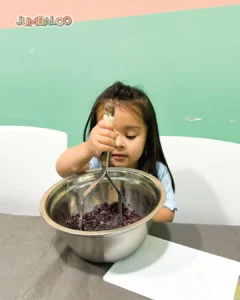
Camp gently flips that script.
Kids practice:
- following a schedule
- listening to other grown-ups
- packing up their stuff
- trying things without immediately looking at you for the answer
This matters because independence isn’t just a personality trait; it’s a skill. Camp gives kids plenty of opportunities to practice in a low-pressure environment.
Give them a week to play, learn and try something new.
Explore Jumbaloo Camps2. Camp Strengthens Social Skills Without “Forcing” Friendships
School social life can be intense. Camp social life is usually lighter because the vibe is different: play-first, team activities, shared games, and lots of “let’s do this together.”
Research and camp outcome reports indicate gains in areas such as social comfort, friendship skills, and leadership over the course of a session, often because kids practice these skills daily in a supportive environment.
And for shy kids? Camp can help because friendships often form around activities (building, painting, running, cooking), not just talking.
3. Camp Helps Kids Regulate Emotions
Here’s the part parents don’t always expect: camp can support emotional development.
A 2024 peer-reviewed study found that, within less than two weeks, camp participants showed improvements in empathy and emotional self-control, along with other positive well-being outcomes.
That doesn’t mean camp makes big feelings disappear; kids will still have them, because that’s normal. But it does give them practice managing frustration, waiting their turn, handling small setbacks, and bouncing back.
4. Camp Boosts Confidence Through “I Did It!” Moments
Confidence doesn’t come from being told “You’re amazing” over and over (even though we all do it).
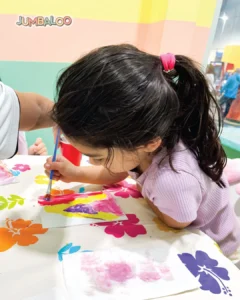
It comes from:
- trying
- failing a little
- trying again
- realizing: Oh. I can actually do hard things.
Camp is built for that. New crafts, games, small challenges, and group activities every day have built-in chances for kids to feel capable.
5. Camp Gives Structure
A lot of parents worry that camp will be “too much” structure. But most kids thrive when the day has a predictable shape: activity, snack, play, lunch, workshop, repeat.
Structure:
- reduces decision fatigue (“What do I do now?”)
- helps kids feel safe and settled,
- makes transitions easier
And for you? Structure means fewer “I’m bored” emergencies before noon.
6. Camp Offers Variety Without You Planning Every Minute
This is a quiet win for parents.
You know how March Break can turn into:
Day 1: Fun!
Day 3: Why is there glitter in my coffee?
Day 5: Are we all okay?
Camp gives kids variety, without you having to invent it daily.
If you’re in Mississauga and looking for a March Break option, Jumbaloo’s March Break Camp 2026 is designed for kids ages 4–12 and offers 3-day or 5-day registration, running March 16–20, 2026.
The week combines themed “learn” activities (such as art, cooking, STEM, and LEGO robotics) with ample play time, so kids get both creativity and movement in one day.
Tips for Parents: How to Choose the Right Camp Without Overthinking It
Not all camps are the same. Here’s a simple checklist that actually helps:
1) Match the energy level to your kid
- High-energy kid? Look for lots of built-in movement/play.
- Quiet kid? Look for smaller group activities and creative workshops.
2) Look for a clear day plan
Even a simple “play time with structured activity with lunch with workshop” plan is a good sign because it shows thoughtful programming.
3) Make logistics work for you, too
Hours and extended care can be the difference between “this is helpful” and “this is chaos.”
Jumbaloo’s camp hours run 8:30 a.m. to 4:00 p.m., with extended care available from 7:30 a.m. to 6:00 p.m. (optional).
4) Ask about food policies
Nut-free policies, snack times, lunch expectations, get clarity up front so mornings are smoother.
5) Don’t ignore sibling/buddy perks
If you’re registering more than one child, check the discount rules. Jumbaloo notes that a sibling/buddy discount is applied to the second child when registering together, and is manually applied during invoicing.
The Real Reason Camp Works: It’s a “Practice Life” Week
Camp gives kids a mini version of real life:
- new adults to trust
- new friends to navigate
- new challenges to try
- routines to follow
- independence to build
And they do it all in a setting that feels fun, not intimidating.
If you’re planning March Break and want something that keeps kids active, learning, and happily tired at the end of the day, Jumbaloo March Break Camp 2026 is one option to consider, especially if you like the idea of themed days (art, cooking, STEM, LEGO robotics) paired with plenty of play.
Sometimes the best gift you can give your child, and yourself, is a week where they grow and you don’t have to plan every detail.
Give them a week to play, learn and try something new.
Explore Jumbaloo Camps



 Don't Miss a Moment of the